


MiRus runs its machines on IoTFlows and its jobs in Epicor, and a two-way connector between the two ties every job to the machining and labor hours behind it. Seeing productivity live, and solving issues sooner because of it, has raised efficiency by more than 20%. The connector went live in about a month.
The Challenge
MiRus, in Marietta, Georgia, makes implants for the spine, the structural heart and the extremities, built from its own molybdenum-rhenium alloy, MoRe. Implants are made in small, exacting batches, and every one of them carries machine time and skilled labor.
Two questions sat at the center of the operation, and neither had a quick answer:
- How are the machines doing right now? Productivity on the floor showed up after the fact, so an issue on a machine could cost a shift before anyone saw it.
- What did a job really cost? The machining hours and the labor hours behind each job were hard to get from the ERP alone, if they could be had at all. Without them, nobody could say whether an improvement on the floor was paying off in the cost of a product line.
The Solution
MiRus put its machines on IoTFlows and connected IoTFlows to its ERP, so the floor and the books finally read from the same data.
SenseAi and SenseAi Embedded on the machines
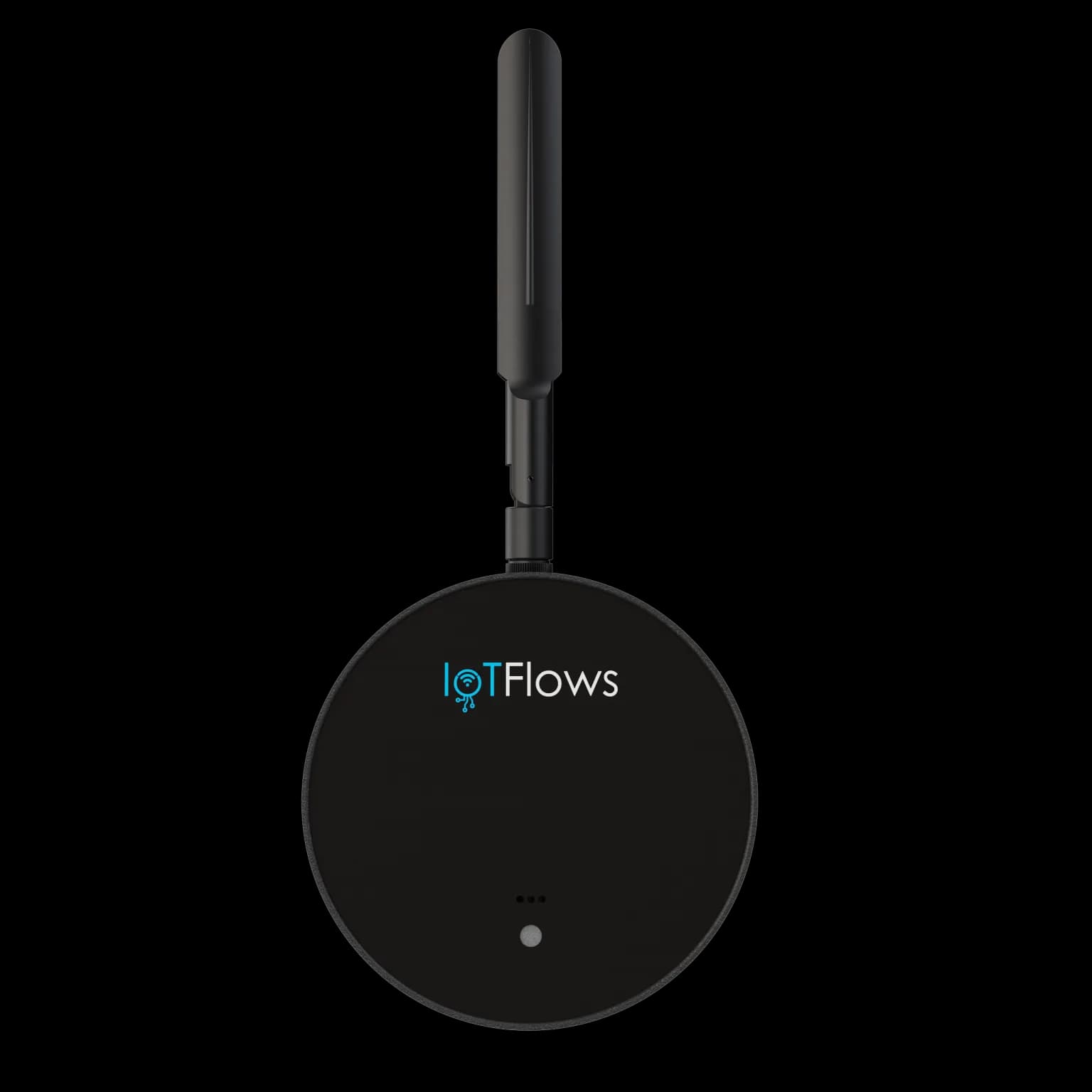
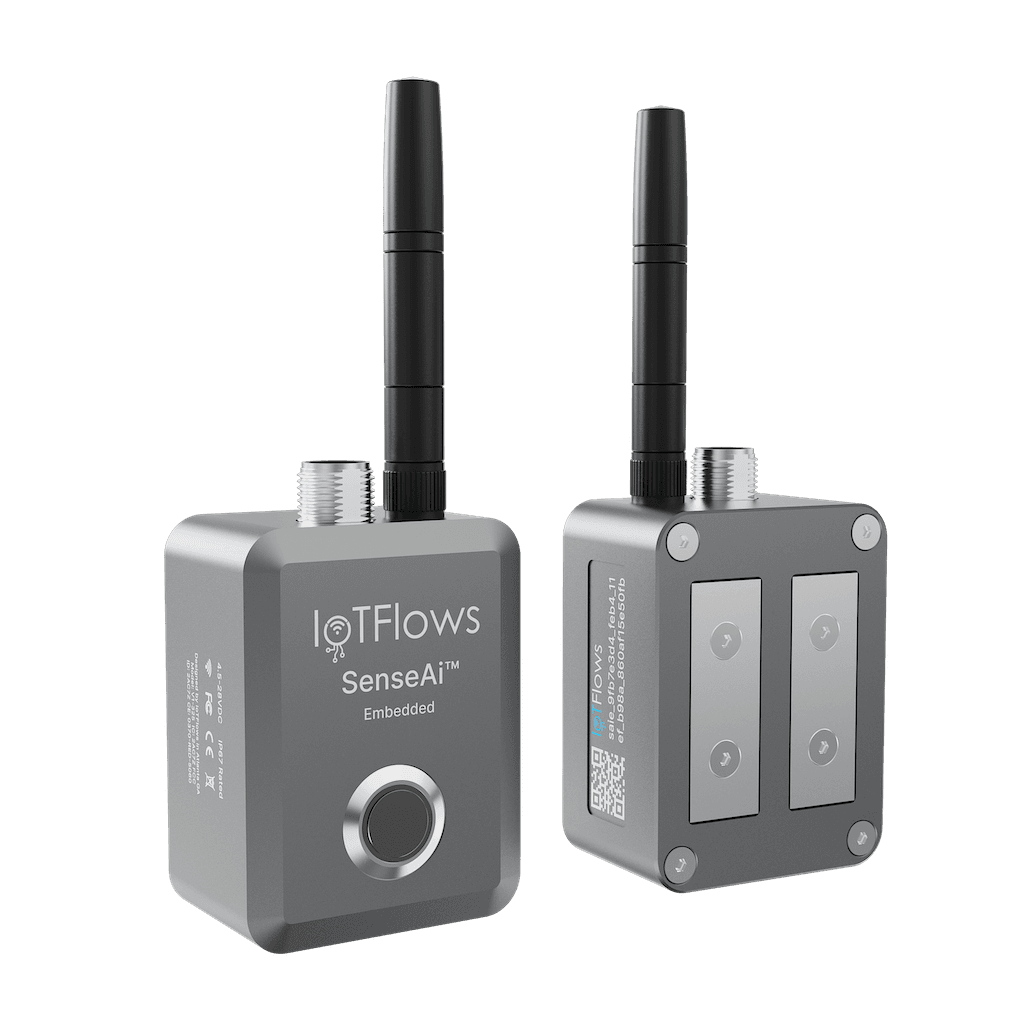
SenseAi and SenseAi Embedded sensors report each machine's productivity live: running, stopped, and how long. The team sees an issue while it is happening, and solves it sooner.
A two-way Epicor connector, built in about a month
IoTFlows built a connector against MiRus's own Epicor, as a custom integration. It pulls every job from the ERP and correlates it with the machining and labor hours it actually took, without a file export or a spreadsheet in between.
Every job, its hours and its cost
With every job carrying its hours, MiRus sees how efficiency gains on the floor have lowered its labor and machining costs, and how they have raised the profitability of each product line.
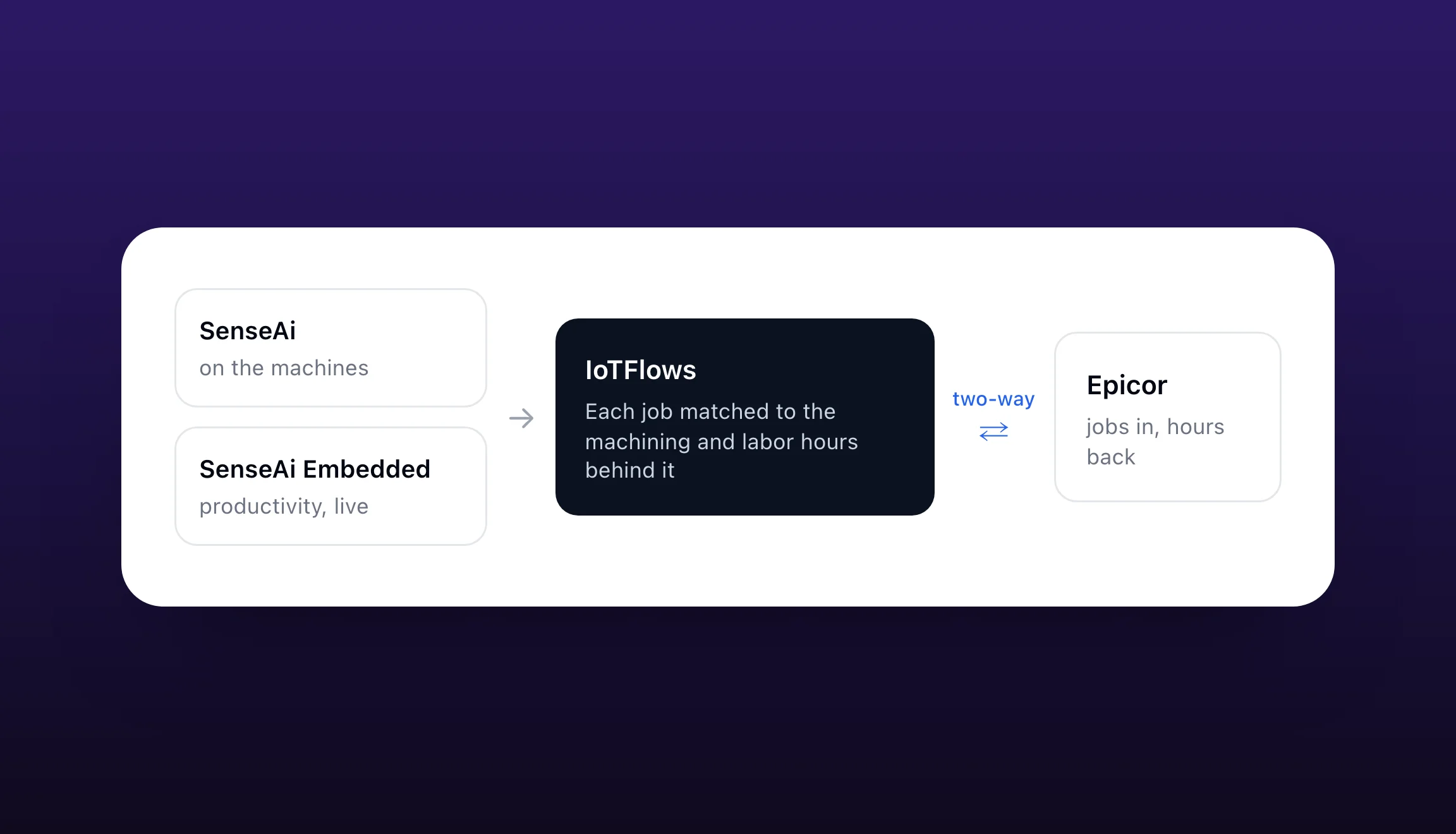 How the data moves: the machines report live to IoTFlows, and the Epicor connector runs both ways.
Where every job stands
Each job from Epicor arrives with the hours planned for it, and fills in with the machining and labor hours it actually took. A job running over its hours stands out while there is still time to ask why, and a job that came in under shows where an improvement on the floor has paid off.
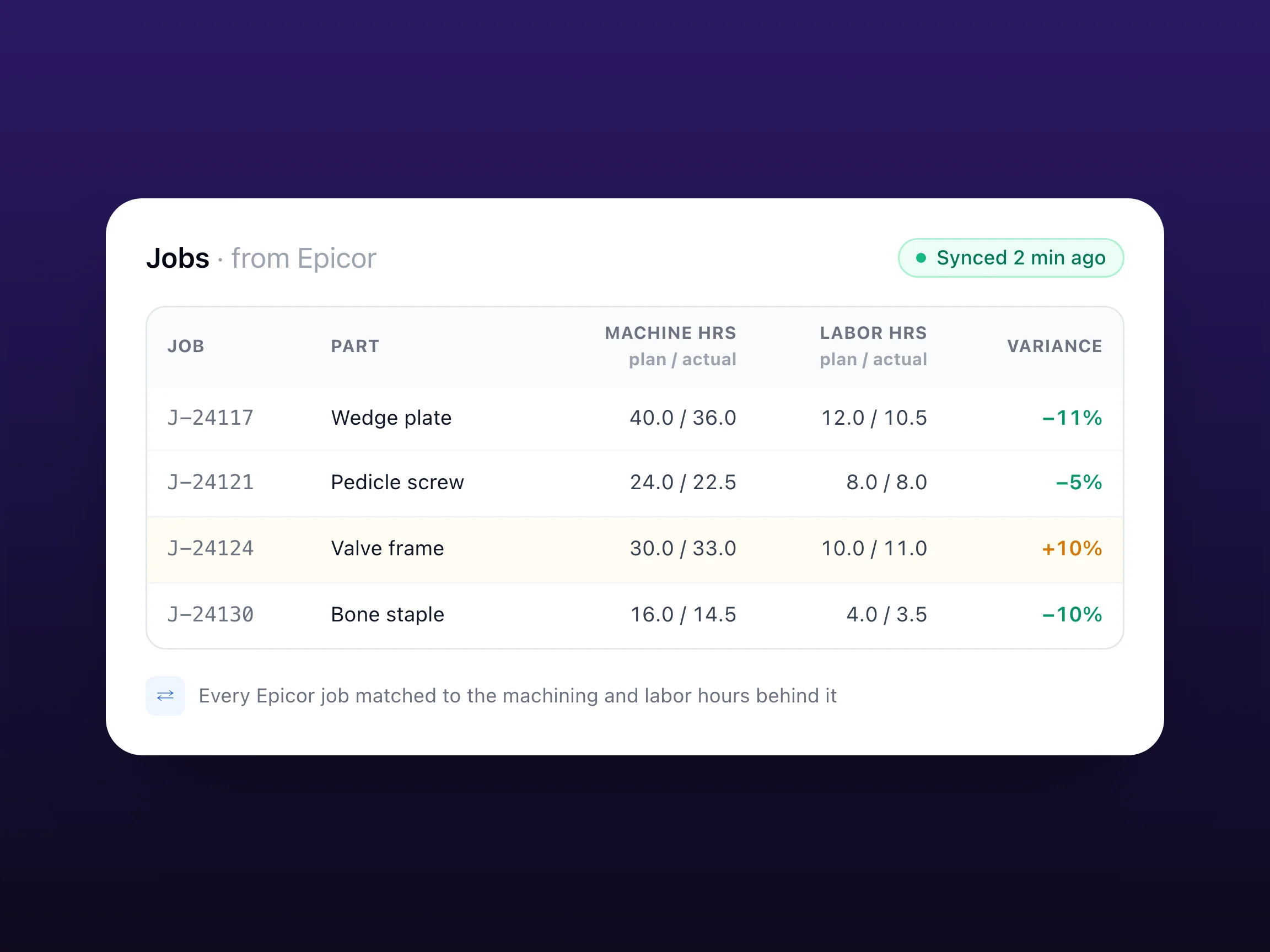 A simplified view with sample data: each Epicor job with its planned and actual machining and labor hours.
The Results
From the Floor to the Books
- More than 20% higher efficiency from seeing productivity live and solving issues sooner
- About a month from kickoff to a live, two-way Epicor connector
- Every job tied to its machining and labor hours, without exporting anything from the ERP
- Labor and machining costs that show how each efficiency gain pays off
- Profitability by product line, built from the hours each job really took
- Real-time productivity on every machine, from SenseAi and SenseAi Embedded
For a manufacturer whose products are made in small, exacting batches, knowing what each job really took is the difference between believing an improvement worked and seeing it in the cost of the product.
"The real-time visibility has been amazing for optimizing our operations. With the ERP integration, I see the numbers and where every job stands, without digging for them in our ERP."
Dennis Moreno, Vice President of Manufacturing and Operations, MiRus
The Features Behind It
- SenseAi for live productivity on every machine. See SenseAi.
- SenseAi Embedded for machines that need the sensor built in. See SenseAi Embedded.
- A two-way ERP connector built against the customer's own Epicor, for Enterprise customers. See Custom integrations and Integrations.
- Downtime tracking that shows when and why a machine stopped. See Find out why a machine stopped.
Cover image: MiRus 3DR interbody implants, with their porous lattice walls. Render: MiRus.