


Stanley Black & Decker used the IoTFlows edge device to pull every welding data point from the robotic welding machines on a major automotive customer's production lines: Tucker automated stud-welding systems, the line Stanley Engineered Fastening builds for car bodies. Its advanced analytics team scores the quality of every weld that goes into a car, and the customer sees how its machines are performing and which welding head needs maintenance before quality slips.
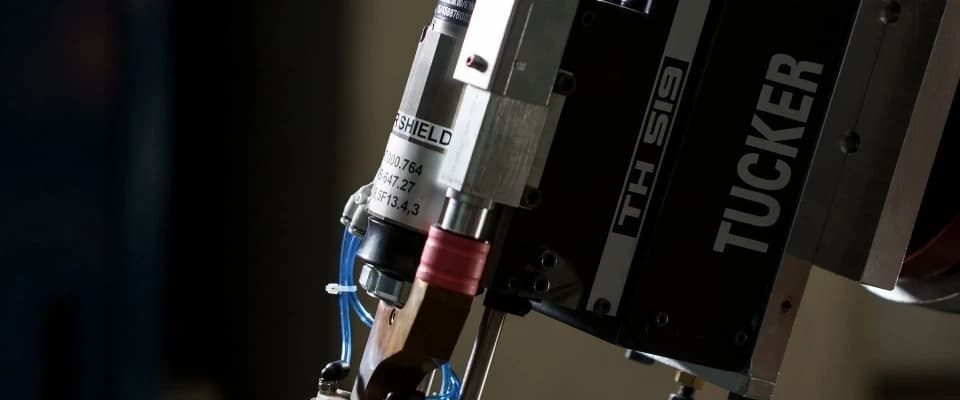 A Tucker stud-welding head on a robot. Image: Stanley Engineered Fastening.
The Challenge
Every car body carries thousands of welds, and every one of them has to meet the automaker's quality standard. On the production lines of one of Stanley Black & Decker's major automotive customers, many of those welds are made by robots carrying Tucker stud-welding heads, line after line. Tucker is Stanley Engineered Fastening's line of automated stud-welding systems for body-in-white: controllers, feeders and weld heads that join studs, brackets and grounding points to the car body.
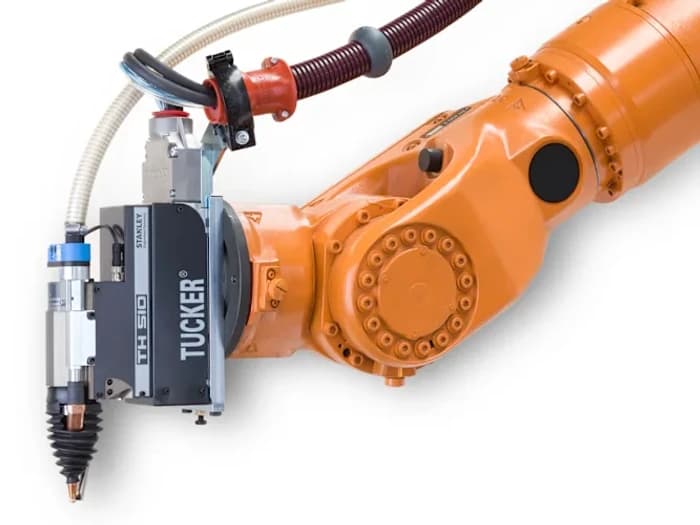
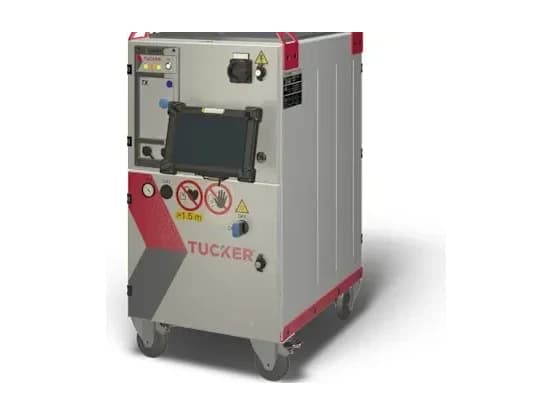
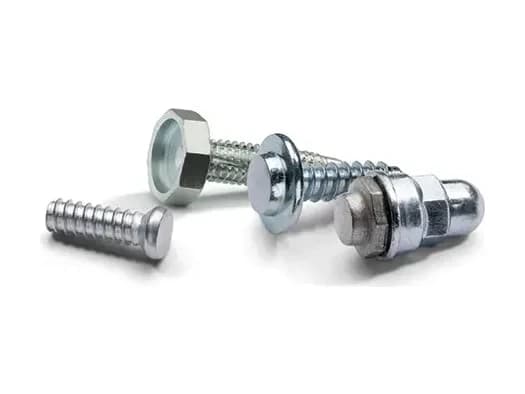 The Tucker system on the line: a stud-welding head on the robot's wrist, the controller that runs each weld cycle, and the weld studs it sets. Images: Stanley Engineered Fastening.
The project, led by Dr. Amir Kashani, Director of AI at Stanley Black & Decker, had three goals:
- Every weld, not a sample. The quality of a car depends on all of its welds, so the analysis had to see every one of them.
- Every data point behind each weld. The robotic welders record far more than whether a weld happened. The analytics team needed all of it.
- Maintenance before quality slips. A welding head wears gradually. The customer needed to see that wear coming, and service the head before the welds it makes fall below standard.
None of that data was reaching an analytics team in a form it could use.
The Solution
IoTFlows connected the welding lines as a custom integration, with the IoTFlows edge device on the floor and the analysis delivered back to the customer.
The IoTFlows edge device on every welding machine
The IoTFlows edge device pulls data straight from the robotic welding machines on the customer's production lines: every welding data point they record, for every weld.
Every weld to the analytics team
IoTFlows streams the data and hands it to Stanley Black & Decker's advanced analytics team, who run their own analysis on it to determine the performance of every single weld that went into a car, against the quality standard the automaker needs to meet and exceed.
Results back to the customer
The results are sent back and presented to the customer, so it sees how each machine is performing and when a welding head looks like it needs maintenance, before weld quality degrades.
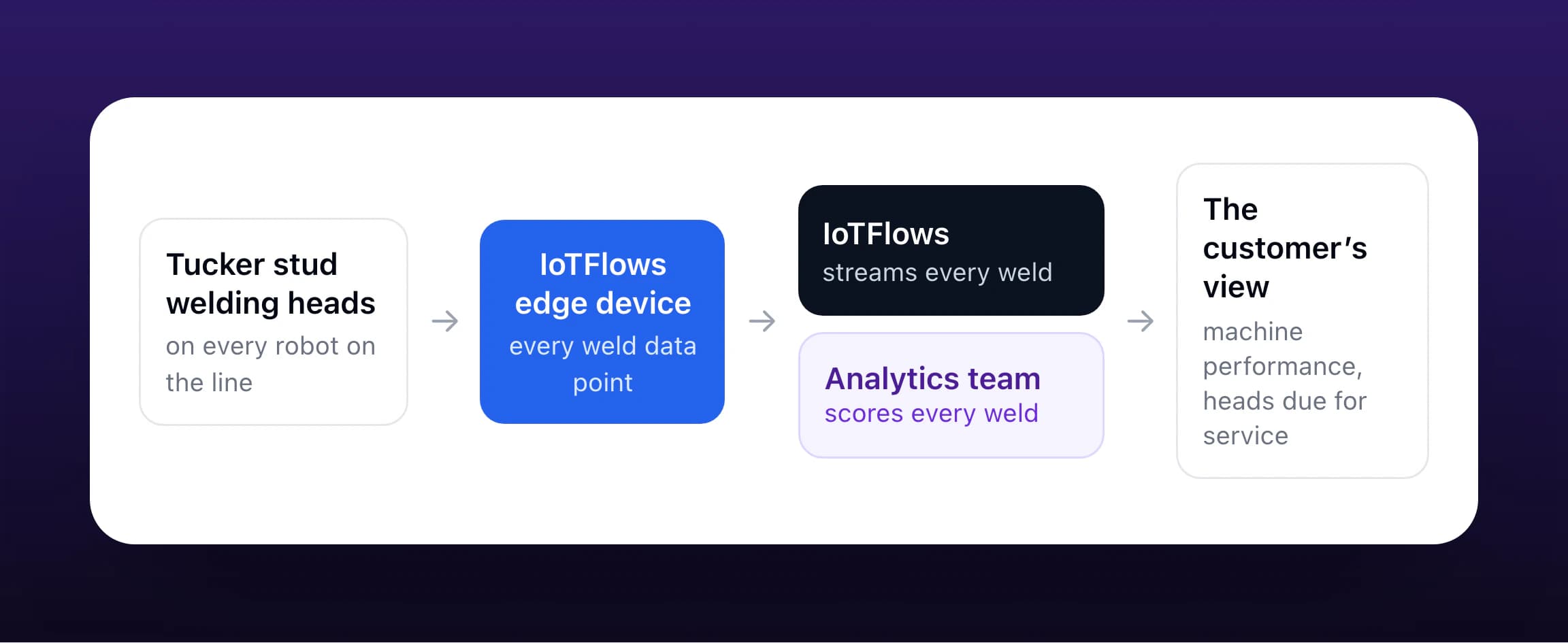 How the weld data moves: from the welding heads through the IoTFlows edge device to the analytics team, and back to the customer.
What one weld looks like
A stud weld lasts a few dozen milliseconds. The head lifts the stud on a low pilot arc, the main arc melts the stud's tip and the spot on the car body, and the head plunges the stud into the melt. The welders record that cycle for every stud, and the IoTFlows edge device collects all of it.
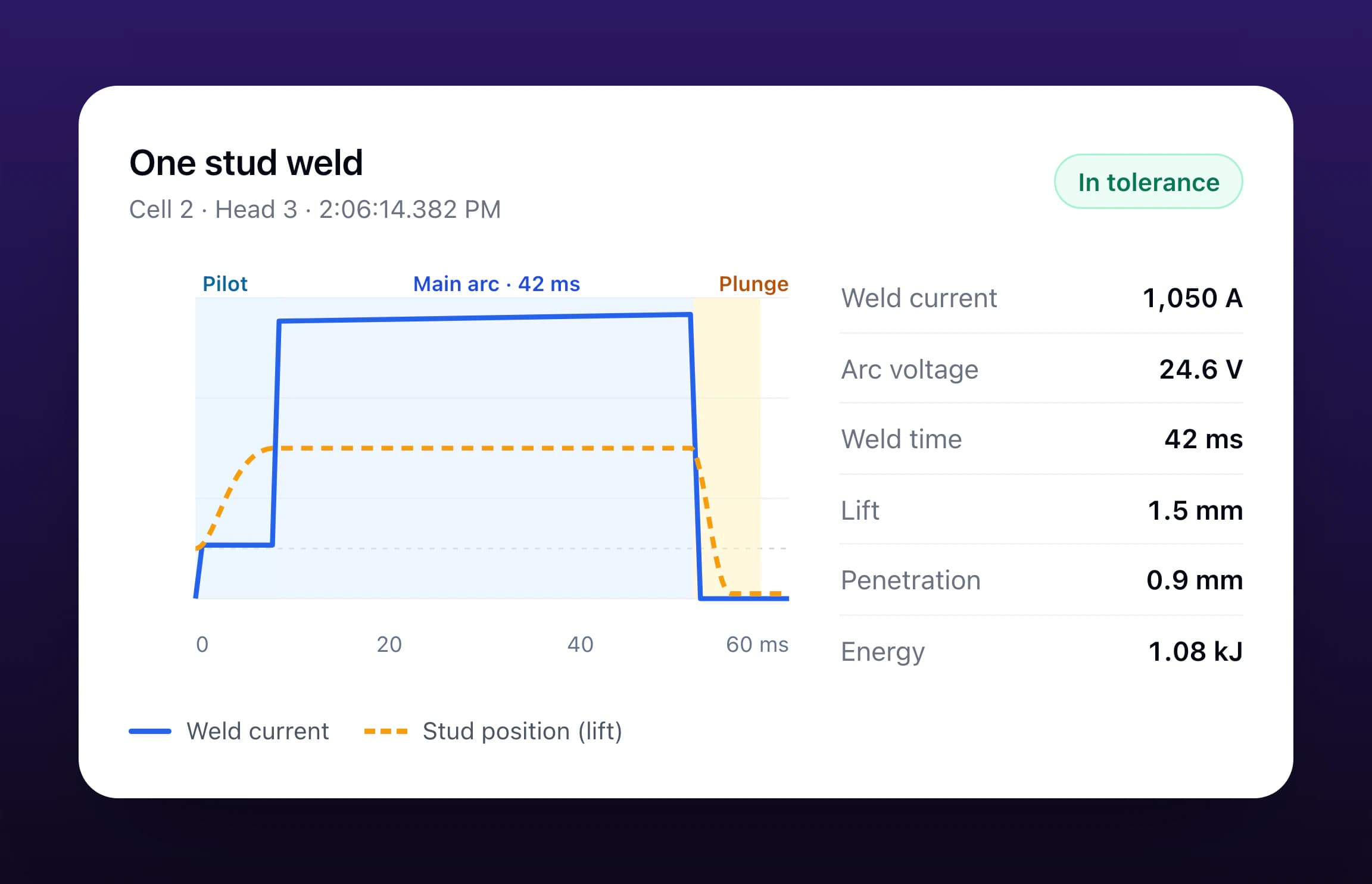 A simplified view with sample data: the current and stud position through one stud weld, and the values recorded for it.
A welding head, before it drifts
Because every weld is scored, the quality of each welding head becomes a trend rather than a surprise. When a head's welds start drifting toward the quality limit, it is flagged for maintenance while its welds still meet the standard.
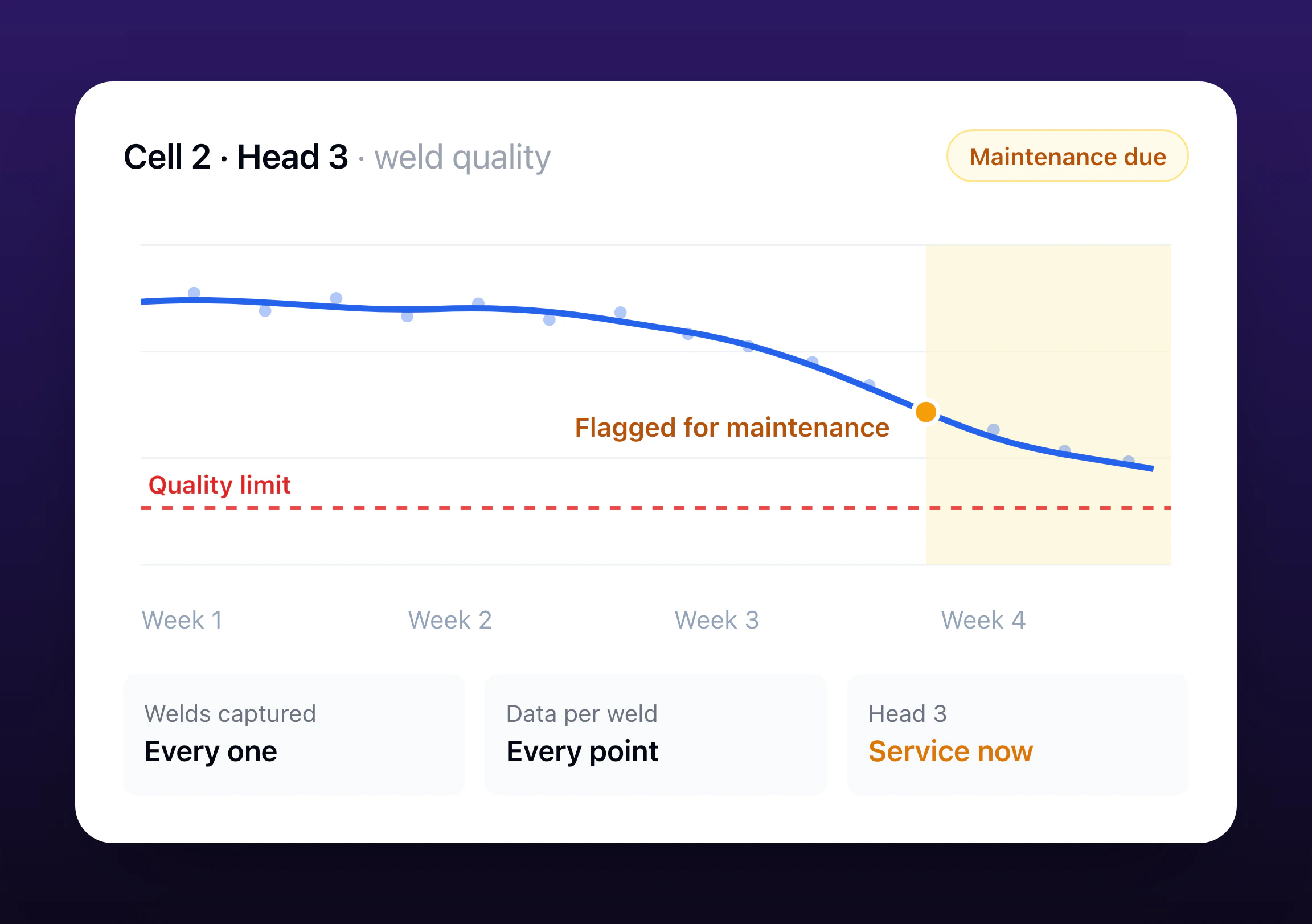 A simplified view with sample data: one welding head's weld quality drifting toward the limit, and flagged for maintenance before it gets there.
The Results
Every Weld, Accounted For
- 100% traceability: every weld captured from the robotic welding machines on the customer's production lines
- Every welding data point pulled by the IoTFlows edge device, not a sample
- The quality of every weld that goes into a car, scored by Stanley Black & Decker's analytics team
- Maintenance per welding head, flagged before weld quality degrades
- A live view for the customer of how its welding machines are performing
For an automaker, a weld that falls below standard is a quality problem that can travel a long way down the line. Seeing every weld, and every head's trend, turns it into a maintenance task scheduled in time.
"IoTFlows is one of the best platforms I have ever worked with."
Dr. Amir Kashani, Director of AI, Stanley Black & Decker
The Features Behind It
- The IoTFlows edge device for PLC, controller, robot and sensor data over any protocol, with drivers written when one is missing. See Custom integrations.
- Integrations to hand the data to the systems and teams that need it. See Integrations.
- Alerts to the people who act on them. See Overview: alerts and integrations.
Cover and product images: Stanley Engineered Fastening, Tucker stud welding.